Zhong Hui
The Romance of the Three KingdomsZhong Hui is a Wei commander whose part in Shu’s fall turns on a striking contradiction: after an apparition of Kong Ming urges restraint toward the people, Zhong Hui orders his army to spare them, but later conspires with Jiang Wei against Wei. The conquest proceeds with comparatively little bloodshed; the rebellion ends in confusion, and Zhong Hui is killed.
Position in the Conquest of Shu
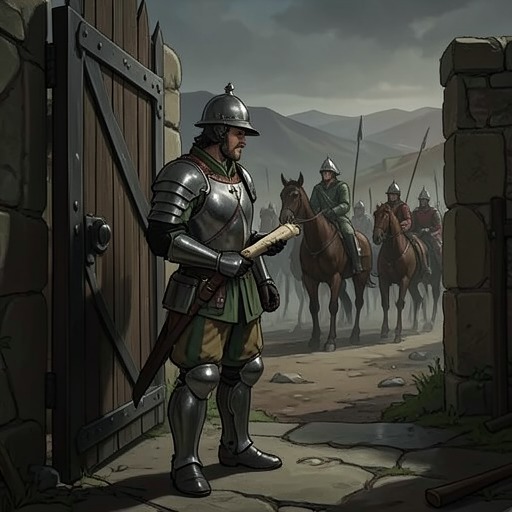
As Wei’s forces prepare to invade Shu, Sima Zhao presents Zhong Hui as a commander with a plan. He acknowledges the possibility that Zhong Hui might rebel after defeating Shu, but dismisses the danger: Shu’s forces would already be broken, and Wei’s people would not support him. This confidence establishes the political risk surrounding Zhong Hui’s campaign even before it begins.
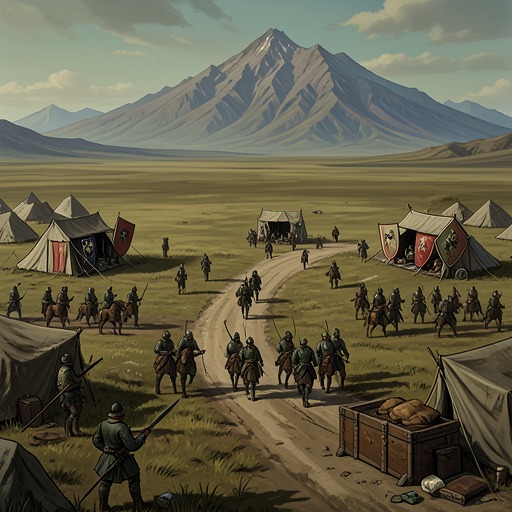
Zhong Hui advances while Deng Ai leads another front. The two commanders’ operations form part of a wider assault on Shu, including the approach to Hanzhong and the campaign against Jiang Wei at Tazhong. The invasion therefore places Zhong Hui not only at the head of an army but inside a contest over who will control the conquered territory and what will become of its people.
The Apparition and the Order to Spare the People
During the advance, Zhong Hui dreams of a figure in Daoist robes carrying a feather fan. The apparition identifies himself as Kong Ming, recalling that Zhong Hui had offered sacrifices in his honor. He tells Zhong Hui that although Heaven’s Mandate has left the Han, the ordinary people of Shu should not suffer further, and urges him to avoid unnecessary harm when the western lands are conquered.
The encounter changes the conduct of the campaign. Moved by the apparition, Zhong Hui has a special banner made for the front of his army bearing the words “Protect the Kingdom; Reassure the People.” He orders that anyone who harms ordinary people will be put to death. The people come to trust him, and city after city falls without bloodshed. In the novel’s account, the supernatural visitation is thus translated into a concrete military order, and that order helps make surrender possible without further violence.
Alliance with Jiang Wei
After Shu surrenders, Jiang Wei is furious, but he tells his commanders that he has a plan to restore the Han. He leads his officers to Zhong Hui and is received as an honored guest. Jiang Wei praises Zhong Hui’s campaigns and says he would have fought to the death had he surrendered to Deng Ai instead. The praise wins Zhong Hui’s favor, and the two become close allies again.
Their alliance turns the danger anticipated by Sima Zhao into an actual rebellion. Zhong Hui imprisons the officers he distrusts, while Jiang Wei encourages him to eliminate them. A junior officer who remains at liberty overhears the plan and alerts Hu Lie; Hu Lie’s son Hu Yuan then gathers other available officers to act against Zhong Hui. The conspiracy’s secrecy proves fragile: a warning passes from a trusted subordinate to an imprisoned commander’s family and then to a force prepared to intervene.
Rebellion and Death
On the night before the planned attack on Zhong Hui, he dreams that a great number of snakes are attacking him. He asks Jiang Wei to interpret the dream. Jiang Wei calls the snakes dragons and presents the dream as auspicious, reassuring Zhong Hui rather than warning him of the danger around him. Zhong Hui then orders Jiang Wei to execute the Wei officers.
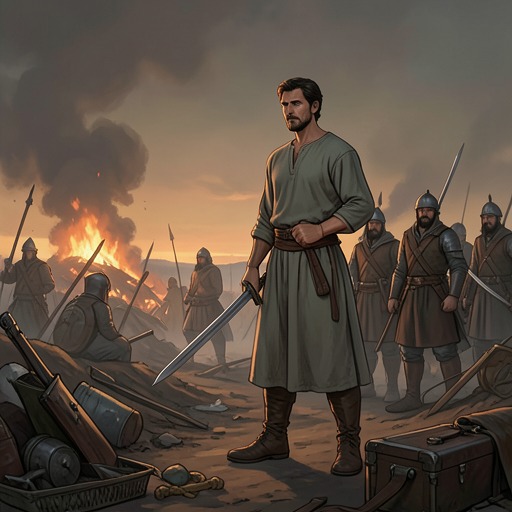
The order begins to be carried out, but Jiang Wei collapses. As he starts to recover, an assault overwhelms the prison and disorder spreads through the palace. Zhong Hui fights back but is struck by an arrow and killed. Jiang Wei, recognizing that the effort has failed and invoking Heaven’s will, takes his own life; his family also perishes that day. Zhong Hui’s death is therefore bound to the failure of the rebellion he joined: the campaign that had brought cities to surrender without bloodshed ends in internal violence and the destruction of its leaders.
Narrative Role
Zhong Hui’s arc places two forms of political action beside one another. The order inspired by Kong Ming’s apparition makes conquest compatible, for a time, with protecting the conquered population. The later conspiracy with Jiang Wei instead seeks to reverse Shu’s surrender and restore the Han, but its reliance on secrecy and the elimination of rivals brings the rebellion to ruin.
The narrative also frames Zhong Hui’s choices through signs whose meanings are contested. The apparition urges him to limit harm; the dream of snakes, interpreted by Jiang Wei as a favorable sign, precedes the rebellion’s collapse. Prophecy and political judgment do not remove responsibility from the characters: Zhong Hui’s decisions—from the protective banner to the order against the Wei officers—determine the different consequences that follow.